


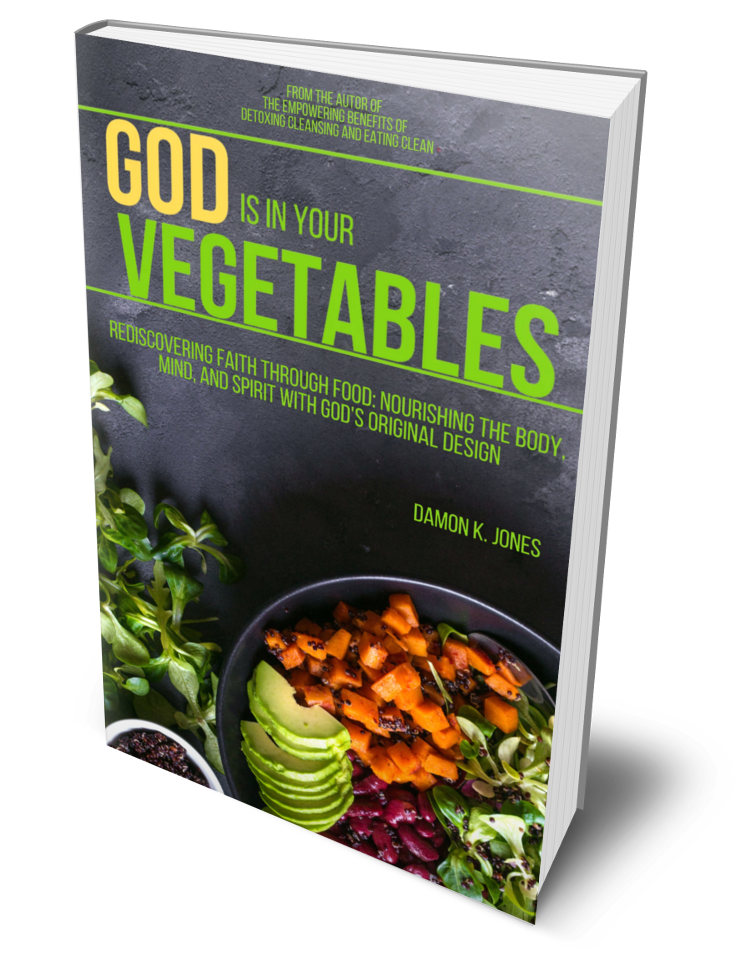
In God Is in Your Vegetables, Damon K. Jones presents a compelling exploration of the profound connection between faith, food, and holistic well-being. Through a deeply spiritual lens, Jones argues that what we eat is not merely a physical choice but a sacred act that reflects our relationship with God, our stewardship of creation, and our responsibility to nurture both body and spirit. The book challenges readers to rethink their approach to food, urging a return to a Kingdom Culture of health and abundance based on biblical principles.
Jones begins by grounding his message in scripture, emphasizing that God’s original dietary plan for humanity, as described in Genesis 1:29, centered on plant-based eating. He highlights how fruits, vegetables, and herbs are divine gifts designed to nourish and heal, reflecting God’s intention for vibrant health and spiritual vitality. The book weaves together biblical teachings, historical insights, and modern health science to underscore the importance of aligning our diets with God’s design.
Throughout the chapters, Jones delves into the detrimental effects of the Standard American Diet (SAD), linking it to chronic illnesses such as obesity, diabetes, and heart disease that disproportionately affect Black communities. He explores the historical and cultural roots of unhealthy eating habits, particularly in the context of soul food, and offers an alternative vision of “soul food” as God’s food—a way of eating that heals and restores.
The book also emphasizes the role of food in spiritual practices and community building. Jones discusses how cooking and eating together can foster deeper connections within families and congregations, transforming mealtime into a sacred act of fellowship and gratitude. He challenges faith leaders, especially within Black churches, to advocate for health and wellness from the pulpit, recognizing the critical role they play in shaping cultural attitudes toward food.
Practical guidance is woven throughout the narrative, including tips for transitioning to a plant-based lifestyle, understanding the healing power of common herbs, and reclaiming the kitchen as a space for spiritual nourishment. Jones also addresses broader issues of food justice, calling on faith communities to partner with local farmers, combat food deserts, and create equitable food systems that honor God’s creation and uplift marginalized communities.
In the conclusion, Jones inspires readers to view healthy eating as a form of worship and a pathway to spiritual abundance. By feeding the body with life-giving foods, we invite God’s energy into our lives, fostering clarity, vitality, and a deeper connection to His purpose. The book closes with a call to action, encouraging individuals, families, and faith communities to embrace a transformative relationship with food that honors God, heals the body, and strengthens the spirit.
*God Is in Your Vegetables* is both a spiritual manifesto and a practical guide, urging readers to take control of their health and faith through intentional, God-centered eating. It is a passionate reminder that the food we choose to consume has the power to nourish not only our bodies but also our souls, enabling us to live fuller, healthier, and more purposeful lives in alignment with God’s divine plan.