

By Damon K. Jones | Publisher, Black Westchester Magazine
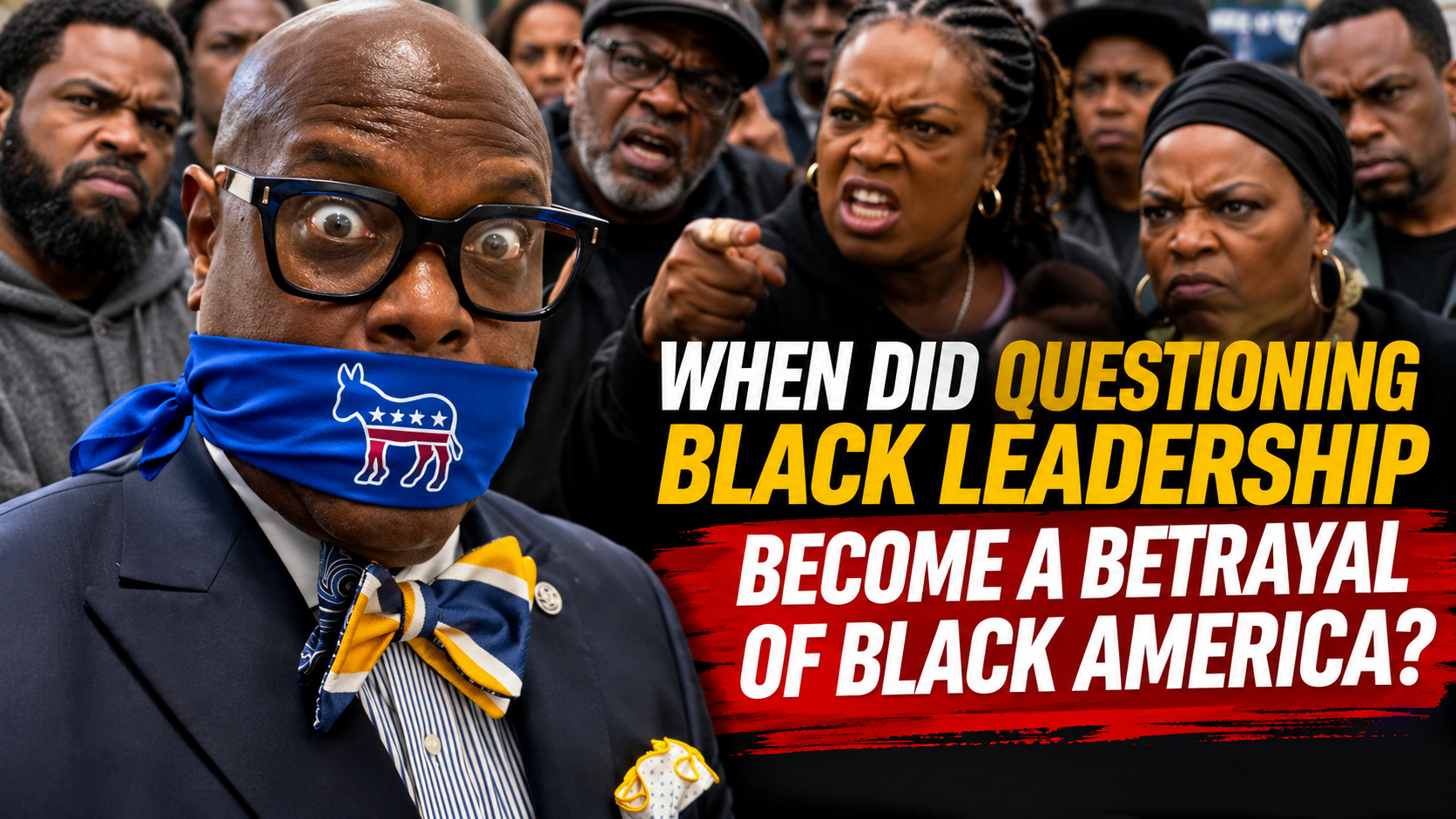
Something troubling is happening in Black America’s political conversations. Questioning Black elected officials, challenging Democratic leadership, or demanding accountability for decades of political loyalty increasingly leads to accusations of betrayal, MAGA sympathies, or secretly supporting Republicans. Instead of examining elected officials’ decisions, the questioner becomes the target.
What makes this disturbing is that politicians are not always the ones discouraging these questions. Sometimes ordinary Black Americans are doing it to one another, defending political parties and elected officials even as their own communities continue to struggle with poverty, unaffordable housing, educational disparities, and limited opportunities to build generational wealth.
When did questioning Black leadership become more offensive than the conditions our communities continue to face? And when did protecting political relationships become more important than demanding measurable results?
THE WES MOORE AND BYRON DONALDS DEBATE EXPOSED THE PROBLEM
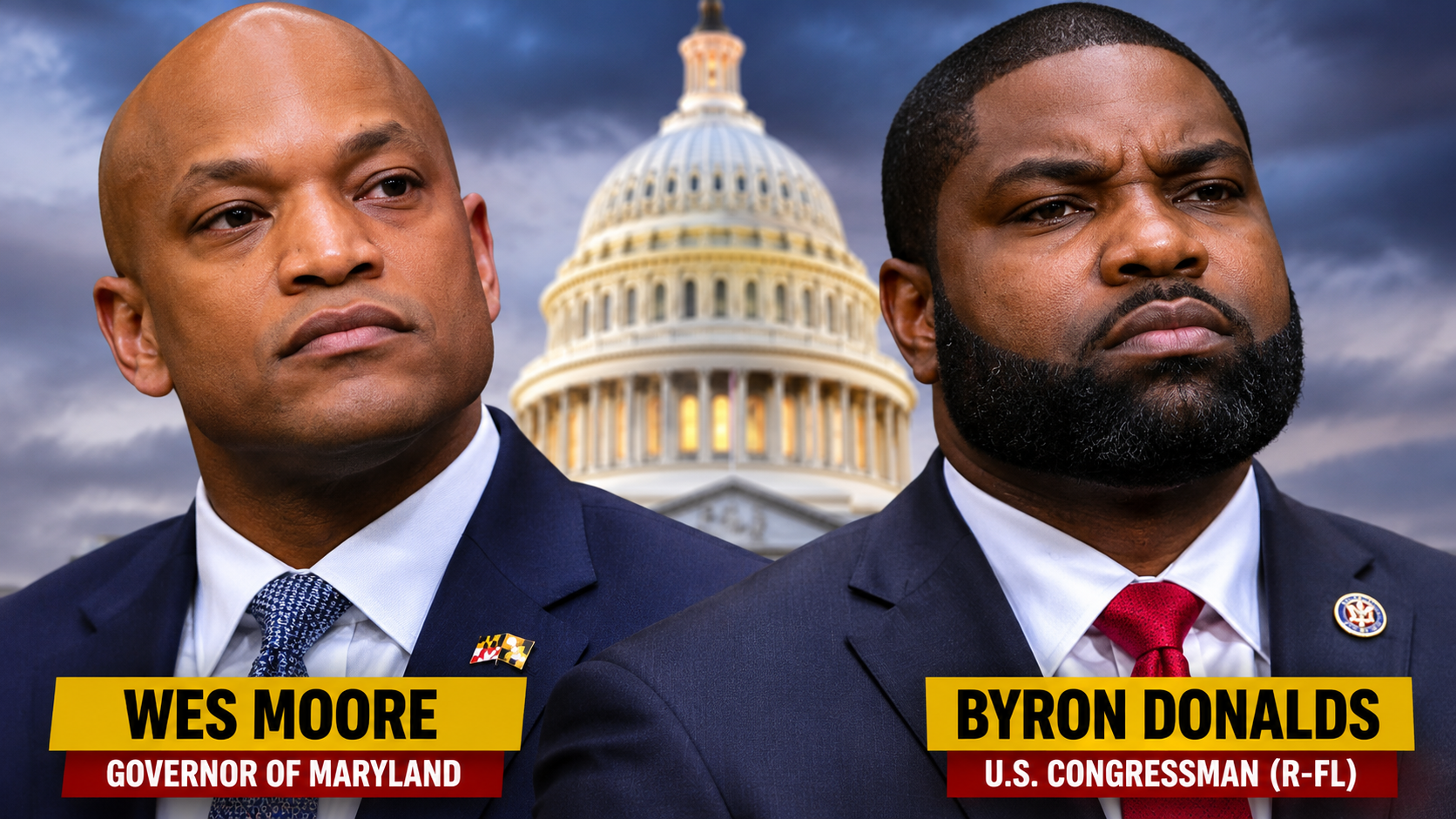
A recent social media discussion about Maryland Governor Wes Moore and Republican Congressman Byron Donalds revealed how quickly political accountability can devolve into political tribalism.
The conversation began with criticism of Donalds and questions about what he has accomplished for Black Americans. Those questions are legitimate because every elected official should be expected to explain their record. But when Moore’s veto of legislation establishing a Maryland reparations commission entered the discussion, the reaction shifted dramatically.
Instead of examining both politicians’ records, some commenters questioned why a Black Democrat was being criticized in a conversation about a Black Republican. Others insisted that Moore had vetoed only a study commission, not reparations.
That distinction is factually important, but it does not explain why the commission was vetoed. Maryland’s proposed commission was intended to examine historical harms and develop recommendations to inform future reparations legislation. Moore argued that the state should prioritize action over further study, while supporters believed the commission was necessary to develop a meaningful legislative framework.
The Maryland General Assembly ultimately overrode Moore’s veto in December 2025. The commission became law despite his objections, underscoring that even members of the same political party can disagree on how to address historical injustice.
But the public reaction revealed something beyond reparations. Rather than discussing the governor’s decision, some commenters questioned the critic’s motives, political affiliations, and credibility.
That raises an uncomfortable question: Why should Black Republican politicians face intense scrutiny, while criticism of Black Democratic politicians is sometimes treated as an accusation of disloyalty?
THE POLITICAL LABEL HAS REPLACED THE ANSWER
One of the most common responses to criticism of Democratic leadership is the accusation that the questioner sounds like MAGA.
A discussion of legislation suddenly becomes an examination of someone’s voting history. A question about public policy becomes an accusation of political opportunism, while a disagreement over leadership becomes a demand that the critic run for office.
But citizens need not become politicians to question government. Parents need not become school superintendents to question educational outcomes, and homeowners need not become mayors to challenge property taxes.
The right to question elected officials belongs to everyone, regardless of political affiliation, occupation, or personal accomplishments. When the questioner becomes the subject of the debate, the original issue often goes unanswered.
Political labels cannot substitute for evidence, and accusations of disloyalty cannot substitute for a legislative record.
WHY DOES THE STANDARD CHANGE?
Another revealing contrast emerged in social media discussions criticizing New York Governor Kathy Hochul over potential tax increases. Those comments included strong agreement, frustration, and criticism of voters who supported her.
Yet questioning Moore, another Democratic governor, produced accusations of political betrayal and attempts to redirect the conversation toward Republicans.
Different policy issues naturally elicit different reactions, but the contrast raises a legitimate question. Does the willingness to criticize Democratic leadership change when the elected official is Black?
Black political representation carries enormous historical significance. Generations fought against discrimination and exclusion to secure the right to vote and hold public office, but those sacrifices were never intended to place elected officials beyond accountability.
Celebrating Black political achievement and examining Black political performance should never be treated as contradictory responsibilities.
WHY SHOULD BLACK VOTERS DEMAND LESS FROM THE PARTY THEY SUPPORT THE MOST?
There is something fundamentally wrong with the logic of asking why Black Americans are harder on Democrats than Republicans when Black voters have consistently given Democrats overwhelming electoral support. In some presidential elections, that support has exceeded 90 percent. Why would a community direct the same political expectations toward a party receiving only a small fraction of its votes as it does toward the party receiving the overwhelming majority?
This is not about giving Republicans a pass or ignoring policies that harm Black communities. Republicans must be held accountable for their decisions, but Democrats must also answer for the promises they make to the Black voters who repeatedly help elect them. When Black Americans question Democratic leadership, the response should not automatically be, “What about Trump?” or “What have Republicans done?” Those questions do not explain what Democrats have delivered.
Political loyalty should create political expectations, not political immunity. If Black voters are among the Democratic Party’s most dependable supporters, then asking what legislation, economic opportunities, homeownership initiatives, educational improvements, and wealth-building policies have resulted from that relationship is entirely reasonable.
The real question is why some people believe Black Americans should give Democrats overwhelming political support while treating demands for measurable results as an act of betrayal.
GOVERNING OR REVENGE: WHERE IS THE BLACK AGENDA?
The same pattern appeared in discussions about what Democrats should accomplish following the 2026 elections. Questions about whether Democratic leaders would prioritize governing or political investigations quickly became arguments over whether investigations were revenge or accountability.
Congressional oversight is a legitimate constitutional responsibility, and credible misconduct deserves examination. But investigations cannot replace a legislative agenda addressing the economic and social concerns of the American people.
What does Democratic electoral success mean for Black homeownership, educational achievement, workforce development, business ownership, and reparations? What legislation will be introduced, and what can realistically become law?
Those questions should be central to every discussion about the election results. Yet political conversations frequently become consumed with defeating Republicans, defending Democrats, and celebrating victories without identifying what those victories will produce.
A Blue Wave is an election result, not an economic development plan. Political success must eventually translate into public policy, and that policy must be evaluated by its consequences.
BLACK REPRESENTATION CANNOT REPLACE BLACK RESULTS
Recent debates involving Zohran Mamdani, Abdul El-Sayed, and established Democratic leadership also reveal inconsistencies in how people discuss political independence.
Challenging party leadership is sometimes praised as courageous when emerging political figures do it. Yet challenges to established Black Democratic leaders, including Hakeem Jeffries, can generate arguments about unity, historical achievement, and protecting representation.
Leadership challenges deserve examination on their merits, not automatic praise or condemnation based on who is being challenged.
The election of Black governors, congressional leaders, and other public officials represents important historical progress. But a politician’s individual success does not automatically translate into collective economic progress for Black communities.
The relevant questions remain whether families are becoming homeowners, businesses are accessing capital, children are receiving quality education, and communities are experiencing greater economic security.
Representation matters, but it must be paired with responsibility.
THE MOST DANGEROUS RESPONSE IS GIVING UP
Perhaps the most troubling reaction during the reparations discussion came from someone suggesting that Black Americans would have better odds of winning the lottery than receiving reparations.
That kind of political resignation reflects frustration with promises, legislative delays, and decades of unresolved questions about historical injustice.
But when people become convinced that nothing will ever change, they may stop demanding change altogether. Political cynicism can become just as damaging to accountability as unquestioning political loyalty.
Reparations involve complicated legal, historical, and financial questions. Those challenges make serious investigation, legislative recommendations, and public debate necessary, not pointless.
Communities cannot expect meaningful answers if they stop asking difficult questions.
THE REAL TABOO IS BEING ENFORCED BY THE COMMUNITY
The most revealing lesson from these discussions is that elected officials do not always need to defend themselves. Their supporters sometimes do it for them.
A question about reparations becomes an argument about technical definitions. A question about Democratic leadership becomes an accusation of MAGA sympathies, while a discussion about governing becomes a debate over political terminology.
Facts and context matter, and comparisons between politicians should be challenged when they are misleading. But factual corrections should help answer substantive questions, not become excuses to avoid them.
Black America has a long history of political disagreement involving civil rights leaders, nationalists, integrationists, religious organizations, labor advocates, and independent thinkers. Those disagreements reflected different strategies for achieving freedom and economic opportunity.
Political independence and disagreement should not be treated as threats to Black unity. A community can share common interests without demanding uniform political opinions.
OUR COMMUNITIES MUST COME BEFORE POLITICAL PARTIES
Black Americans have legitimate historical and policy reasons for supporting Democratic candidates. But those reasons should not prevent us from examining the party’s accomplishments, priorities, and unfinished commitments.
The same standards must apply to Republicans, Democrats, independents, and every elected official who seeks public trust.
No permanent friends. No permanent enemies. Only permanent interests.
That principle means political relationships should be evaluated by the interests they serve, not defended simply because they have existed for generations.
Black America cannot afford another political cycle in which defending elected officials becomes more important than examining unemployment, educational outcomes, homeownership, economic development, and community safety.
The right to vote includes the right to question those who receive that vote. Political empowerment means more than electing representatives; it means retaining the authority to examine their decisions and demand accountability.
The real betrayal of Black America is not questioning Black leadership. It is allowing our communities’ conditions to remain unresolved because questioning those in power has become politically uncomfortable.
Damon K. Jones is the publisher of Black Westchester Magazine, an author, independent political commentator, and retired law enforcement professional.
